 In the traditional employer-employee world, this contentious question causes much angst. It can cause dissatisfaction, breed resentment and damage self-confidence. The business community at large has gone to great lengths to establish ‘award’ schemes with standard pay rates for defined tasks. Business benefits because it can predict the cost of doing business. Employees who are not in a position to negotiate for themselves benefit.
Worth Is Not Value
The world is full of many products ranging from simple to complex, each of which has sprung from an individual’s imagination. Are these people worth more than an employed web designer who has created a money-spinning site for her company? Are they worth more than an industrial designer who solves a multi-million dollar packaging problem for his company’s product distribution?
In my opinion, NO.
We value people or organisations who we perceive as having provided something we desired. That value is then distributed back through all who have added to it along the way. There is often very little correlation between the steps of added value and how they are rewarded or what they are worth. The result: if I am employed there is often no real link between my worth and the value I create.
Surely I’m Worth More?
When a business employs someone, it is making an investment for which it expects a return. The business takes the responsibility and the risk and therefore deems the cost of the employee should be low – not very different from how that business generally goes about making its investments. The employee, on the other hand, may see large profits from his contribution and often forgets that his risk is minimal. No wonder huge chasms are created between employers and employees.
Going It Alone
Historically, being rewarded fully for the value you’ve created has only been realised by getting out there and doing business for yourself. Even this, however, is a poor indicator of your worth. The right or wrong mix of opportunities and how you deal with them can result in anything from remarkable success to spectacular failure. A failed start-up venture risks de-valuing your self-worth and sending you scuttling back to the ‘safety’ of employment.
I’m Going To Do It. How Should I Charge?
If all you do is offer your services to a business but continue to behave like an employee, the business still takes the responsibility and the risk. You are adding value by removing the overhead structure that the business might otherwise have needed. You add value by bringing skills and experience which the business might not have; you bring opportunity associated with their need and your availability. In this case the business will still expect to pay some kind of market rate for your service. The rewards will be significantly better – but they won’t be fantastic.
How Can I Reap More Of The Value?
Put simply, if you want to be rewarded directly for the value you create, you need to change your mindset from that of a practitioner to that of a business. This means taking on some of the risk and the responsibility – maybe even all of it – yourself. Only by assuming risk in a business undertaking will you have a valid claim on the final delivered value.
Your risk could take many forms. For example, you might offer a money-back guarantee linked to measured sales, savings or increased productivity. You might contribute some form of equity or even your own capital. Whatever shape the deal takes, you will need to be sure that it works for you, which is no different from any other business-to-business dealing. And you will need to make sure that the deal is managed under a legally binding contract or you may find yourself in the unfortunate position of witnessing that value slip away in legal arguments. But that’s another story.
Decide Where You Want To Be

Regardless of your potential, your worth to others is based on the value you create. If you’re not prepared to take risks, your reward will be at the going market rates. On the other hand, if you really desire to be rewarded for the true value you create, take on those risks yourself and reap your true value.
…Robert
 As a new product innovator I understand the problems supporting new products and services. Even doing your best, you still end up with a handful of customers who will complain to the point of being obnoxious. Have you ever found yourself no longer listening and simply wishing they would go away?

 There is no doubt about the amazing change email has made to collaborative work. It has rapidly become the mainstay of our working communications but with it brings problems.

 Why is it that the same task given to two equally talented individuals is likely to take completely different amounts of time to complete? Popular opinion would have you believe it is all about focus!

 During a recent trip I realised that my in-car MP3 player, which I had always used for listening to podcasts, had not been used for months. Instead I have been listening to MP3s directly from my smartphone. It certainly is not as clear and as easy to listen to as my in-car MP3 player but it is more convenient and importantly, more fun.

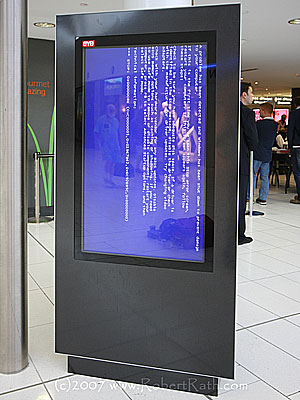 ‘A problem has been detected and Windows has been shut down to prevent damage to your computer…’
 Please pause for just a moment and ask yourself these three questions.

 The information appearing on Robert Rath’s site ‘Innovation Mentor’ is of a general nature and is not to be relied upon as being complete, accurate or up to date. The information is subject to change by Robert Rath at any time without notice. If you require confirmation of any information please contact Robert Rath.


